
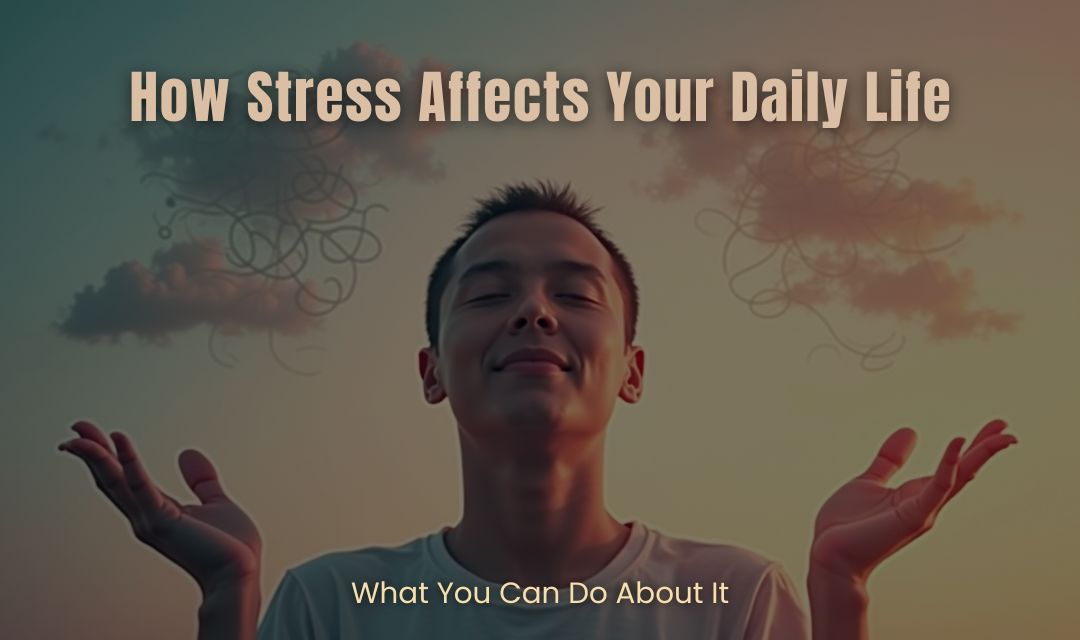
It took us years to acknowledge that stress is an actual mental issue, but it’s not just in the mind; its symptoms show up in the body as well. We often assume it’s just a little stress in the brain that will fade on its own, yet when stress becomes too much, the brain grows tired, and that tiredness appears physically, too. The book Victim to Victorious is a stress awareness guide that explains this clearly and offers practical stress management tips to overcome these gnawing feelings.
The author emphasizes that stress isn’t always a fleeting emotion; sometimes it creeps into your daily life in small, unnoticed ways and affects your well-being over time. And the reason we feel burnout is that we do not know stress management. Edwidge Gilbert shows how daily stress affects your body in the long run and why understanding it is the first step toward overcoming it.
The author explains that when you are sad, your whole-body system slows down. Stress is “energy in motion,” and when that energy has no direction, it spills everywhere inside you. Most of your strength burns up internally, feeding worry and emotional tension instead of anything useful. Too little is left for normal functions, so your system tilts out of balance. That’s why sadness doesn’t just hurt emotionally — it tires you physically. Your body stretches its remaining energy across everything, and that uneven load is draining.
When stress becomes a constant companion, the body and mind start to collect a kind of inner pollution, figuratively and literally. Stress drains your energy, so it disrupts your emotions, hormones, and the natural rhythms that keep you steady. This happens because people avoid facing these feelings and end up suppressing them. Those suppressed emotions slowly turn into toxicity. Negative feelings like fear, anger, or sadness, which already create stress, become even heavier when pushed down. They don’t disappear until they are fully healed or resolved, so they begin to fester inside you. And since they have nowhere else to go, they eventually surface in different ways throughout the day, like affecting your appetite, increasing your heart rate, thus affecting your thoughts, reactions, and overall well-being.
The author explains that stress makes you lose your appetite, feel dehydrated, and become fatigued. All of this happens because most of your energy is being used to fight and overcome those negative feelings. You end up feeling drained and low on strength. Ever wondered why you feel low on energy when you are sad? Or why, after fighting with a friend in anger, do you feel exhausted the entire day? Even your mood is off — but why is that mood off? It is because negative feelings create stress, and that stress triggers irregular emotions while also draining your energy. When stress takes over, your system works overtime, and that extra effort leaves you depleted. Eventually, both your mood and your physical state reflect that inner exhaustion.
Henceforth, the author describes stress as emotional clutter, as it does not dissipate until properly resolved. But oftentimes, we do not know how to effectively overcome these feelings, and not let them overtake our daily life. For this reason, the author has described a plethora of stress management tips to overcome it. This stress awareness guide offers a straightforward yet practical approach that doesn’t feel like extra work. His advice feels like a walk in the park, as when we do not understand how to resolve it, it comes in handy.
Gilbert asks us to declutter and create. He explains that stress piles up and blocks your focus, peace, and energy. Therefore, the first step to overcome it is to declutter the inner load you’ve built over time. It is not a quick fix and doesn’t happen overnight. It takes patience, just like cleaning a storeroom. You can’t do it in a single moment. If you rush and try to push everything at once, something will break. The author says you must remove the emotional debris: the fears, worries, regrets, and heavy feelings you usually suppress. She explains that clearing happens through awareness and simple practices like breathing, pausing, and using her Dexxtra technique to settle emotional overload. The goal is not to fight emotions but to release the stuck energy behind them.
Dexxtra is a finger-based stress relief method designed to help you calm specific negative emotions by gently holding or touching each finger. The author teaches that every major emotion is linked to a particular finger, and by applying light pressure, like a grounding touch, you can soothe the emotional charge stored in your body. The technique works because emotions create physical reactions. They speed up your heartbeat, tighten your muscles, and disturb your breathing. Dexxtra interrupts that reaction. When you hold the finger associated with the emotion you’re feeling, your nervous system receives a signal to settle, slow down, and rebalance.
In the end, the author reminds us that stress is not something to ignore but something to understand and gently manage. When you learn to declutter your emotions and create healthier inner habits, stress loses its power over your daily life. Simple practices like breathing, pausing, and using the Dexxtra technique help calm your mind and body without feeling like extra work. Bit by bit, you regain your energy, balance, and clarity. The message is simple: with awareness and small daily steps, you can handle stress before it overwhelms you.