
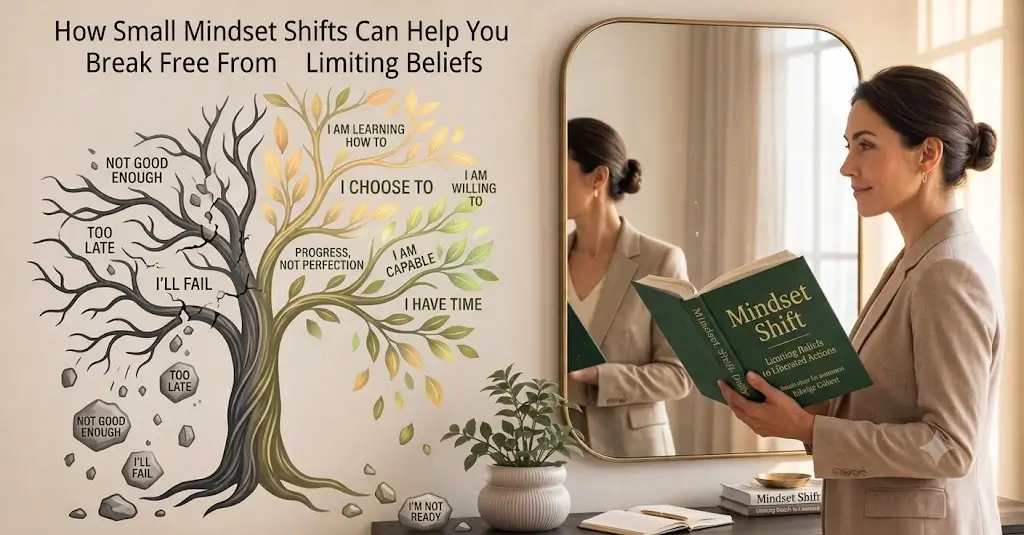
Change rarely begins with something big or dramatic. More often, it starts quietly with a single thought that begins to shift the way you see yourself. The truth is, lasting transformation is usually built through small, consistent changes in mindset rather than sudden breakthroughs.
Many of the beliefs that shape our decisions today were formed long ago. They come from experiences, environments, and repeated messages we absorbed over time. Without realizing it, these internal stories can influence how we think, act, and respond to life.
This idea is strongly reflected in Victim to Victorious: A Fresh Start in 28 Days by Edwige Gilbert, where the focus is not on forcing transformation, but on gently reconditioning the mind through awareness, repetition, and simple daily practices.
The good news is that these patterns are not fixed. They can be reshaped.
Most limiting beliefs don’t begin as facts. They begin as experiences. A critical comment, a failure, or repeated doubt from others can slowly turn into a belief we accept as truth.
Over time, thoughts like “I’m not good enough” or “I can’t do this” start to feel automatic. They become part of our inner dialogue, even when they no longer reflect reality.
But these beliefs are not permanent traits. They are learned patterns. And anything learned can be changed.
The first step is simply recognizing that what you believe about yourself is not always the truth, just a story that has been repeated for a long time.
Most people try to change their habits without first noticing the thoughts driving them. That’s why change often feels frustrating or temporary.
Real progress begins with awareness.
When you start observing your thoughts instead of automatically believing them, something important shifts. You create space between what you feel and how you respond.
This space allows choice. Instead of reacting out of habit, you begin responding with intention. That’s where real change starts taking shape.
The words you use with yourself matter more than most people realize. Language doesn’t just describe your thoughts, it shapes them.
Simple shifts can change your internal experience:
Instead of saying “I have to,” try “I choose to.”
Instead of “I can’t,” try “I am learning how to.”
Instead of “I should,” try “I’m willing to.”
These may seem small, but they completely change the emotional tone behind your thoughts.
One feels the pressure. The other feels like ownership.
Over time, this kind of language helps reshape how you relate to challenges and to yourself.
Mindset change doesn’t happen in one moment. It builds through repetition.
Small daily practices like mindful breathing, reflecting on progress, or taking a moment to reset your thoughts can gradually replace old mental patterns.
Even a few minutes a day makes a difference when done consistently.
The mind learns through repetition. What you repeat often becomes your default way of thinking.
Many limiting beliefs are tied to emotional experiences we haven’t fully processed. Instead of avoiding these feelings, healing begins when we allow ourselves to acknowledge them without judgment.
Mindfulness helps create this space. It allows you to notice what you feel without becoming overwhelmed by it.
When you stop resisting your emotions, they lose their intensity. Over time, this creates room for clarity, calm, and better decisions.
A common misconception is that confidence comes before action. In reality, it works the other way around.
Confidence grows through experience. Every time you take action despite doubt, you strengthen trust in yourself.
Even small wins matter. Each step forward reinforces the belief that you are capable of handling more than you previously thought.
Breaking free from limiting beliefs is not about forcing change. It’s about noticing what no longer serves you and choosing something better, one thought at a time.
As Victim to Victorious: A Fresh Start in 28 Days by Edwige Gilbert shows, real transformation is not about sudden breakthroughs. It is about small, consistent shifts in thinking and behavior.
With awareness, consistent practice, and small shifts in how you think and speak to yourself, real change becomes possible. Not overnight, but steadily and meaningfully.