
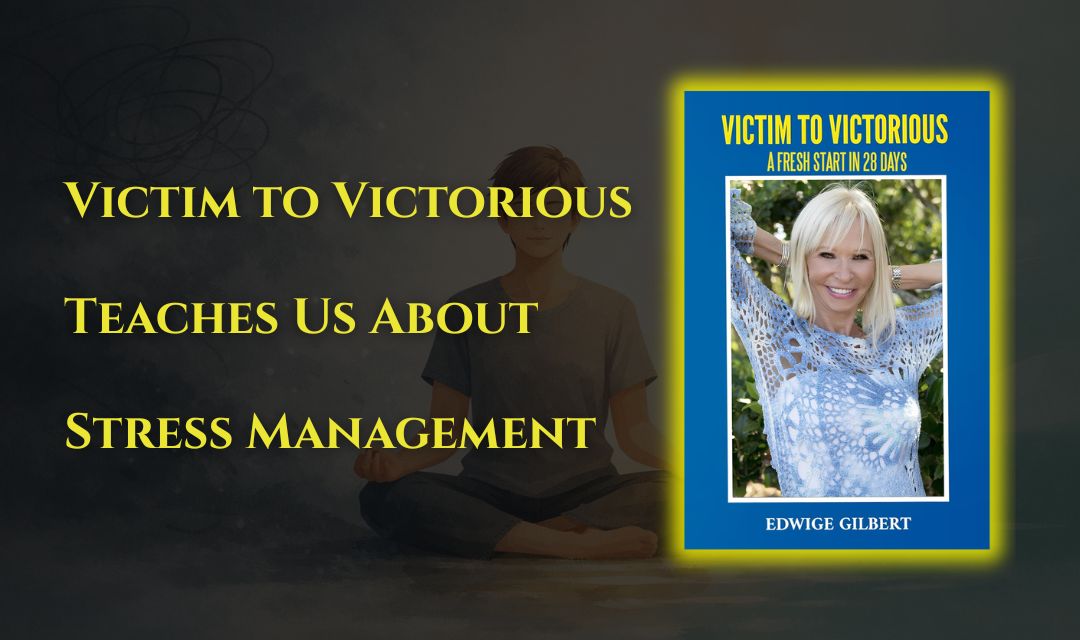
Stress has become an unavoidable part of our lives, but it is interesting to note that stress itself isn’t something that overwhelms us; it’s also about the way we respond to it. In Victim to Victorious, Edwige Gilbert reframes personal struggle not as a life sentence, but as a starting point. Through her 28-day “Fresh Start Program,” she offers practical tools to shift from emotional survival mode to empowered living.
The book is deeply rooted in personal transformation; however, its core lessons double as a powerful Stress Management framework, one that focuses on awareness, emotional clearing, and daily habits that restore balance.
Let’s explore what this journey from victim to victorious teaches us about managing stress in everyday life.
The book holds multi-layered learnings for its readers; however, one of the most impactful lessons from Victim to Victorious book is s that feeling trapped by circumstances, emotions, or past trauma creates chronic stress. The author shares how early experiences of abandonment, fear, and self-doubt shaped her emotional patterns. But instead of staying defined by those experiences, she developed tools to transform them.
This is where the whole root-cause of stress management begins, that is, with self-awareness.
Rather than fighting stress with willpower, the book emphasizes emotional rebalancing. Stress is not eliminated it is transformed. This subtle but powerful shift is central to the Stress Management guide through Victim to Victorious: you are not powerless over your reactions. You can clear old patterns and create new ones. The question becomes: Are you reacting from habit, or responding with intention?
Another important outlet that the author takes you towards stress management is meditation. Which is not looked upon as a luxury, but rather as a necessity. Gilbert describes meditation as the gateway to calming the “Monkey Mind” that restless internal chatter that fuels anxiety and fear.
Her simple techniques, such as square breathing and abdominal breathing, help regulate the nervous system. These aren’t abstract spiritual ideas; they are practical tools for calming stress responses in real time.
Meditation becomes a reset button. By focusing on breath awareness, you interrupt stress before it spirals. Over time, this builds emotional resilience.
In many ways, this is the heart of the book: mastering your breath is mastering your reaction.
If you’ve ever wondered how constant tension affects your focus, relationships, or sleep, you may find it helpful to explore How Stress Affects Your Daily Life, which explains the subtle but powerful ways stress shapes your habits and health.
There are multiple reasons that cause chronic stress in our lives, and one among them is having constant emotional baggage. The book’s “Clear and Create” method begins with clearing releasing unproductive emotions such as anxiety, fear, anger, and guilt.
Through visualization exercises like “The Rowboat” meditation, the book guides you to imagine throwing your worries overboard. While symbolic, this exercise trains your brain to detach from suffering over certain thoughts or feelings.
This is one of the most practical self-empowerment strategies for stress relief presented in the manuscript. Rather than suppressing emotion, you observe it without judgment, then consciously let it go. Stress intensifies when we resist what we feel. It softens when we acknowledge and release it.
One of the most powerful insights from the book is that stress management is not confined to a meditation cushion. It extends into daily living. Helping you to do away with the lingering thoughts and feelings and choose to live a content and stress-free life.
Mindful eating transforms unconscious habits into intentional nourishment. Emotional emptiness often triggers stress eating. When you slow down and focus on taste, breath, and sensation, you reduce impulsive behaviour and restore balance.
These examples highlight that daily stress management habits don’t require dramatic life changes. They require conscious presence.
When practiced consistently, these habits retrain the brain to respond rather than react.
Language shapes how we perceive stress. In the book, the daily affirmation “I Can, I Do, I Will” acts as a neurological reconditioning tool. Instead of reinforcing helplessness, this mantra builds confidence and commitment. Neuroscience research suggests that repeating positive statements creates new neural pathways. Over 28 days, practicing this repetition rewires habitual thinking.
This is one of the clearest lessons from victim to victorious book: stress diminishes when self-talk shifts from criticism to empowerment.
Rather than saying, “I can’t handle this,” you declare capability. That simple shift lowers emotional tension and increases problem-solving ability.
The book uncovers another overlooked aspect of Stress Management: physical balance. Gilbert emphasizes hydration, balanced nutrition, and mindful food choices as ways to stabilize mood and energy.
Blood sugar spikes, dehydration, and fatigue all amplify stress. When your body goes out of balance, your emotional resilience weakens. The lesson here is simple: mental calm needs physical support. Small shifts, such as drinking more water or choosing energizing foods, become part of sustainable daily stress management habits.
Stress will never disappear completely. The author herself makes that clear. But what Victim to Victorious teaches is that stress does not have to control you. Through meditation, mindfulness, emotional clearing, nourishing habits, and empowering language, the journey from victim to victorious becomes a practical roadmap for Stress Management.
The transformation begins not by eliminating stress but by changing your relationship to it.
And that shift, practiced daily, turns survival into strength.